

A Closer Look: Was Lewis Ives More Modern Than He Appears?
Written by Joshua Risner
The paintings of Lewis T. Ives are often seen as the epitome of 19th-century academic work. To the casual observer, his execution seems effortless and entirely intentional; his draftsmanship is impeccable, and his grasp of anatomy is flawless. When you first approach one of his portraits in the Michigan State Capitol, you are immediately struck by the "machine-like" smoothness of the surface. Without visible brushstrokes, they almost appear to have been printed or digitally rendered.
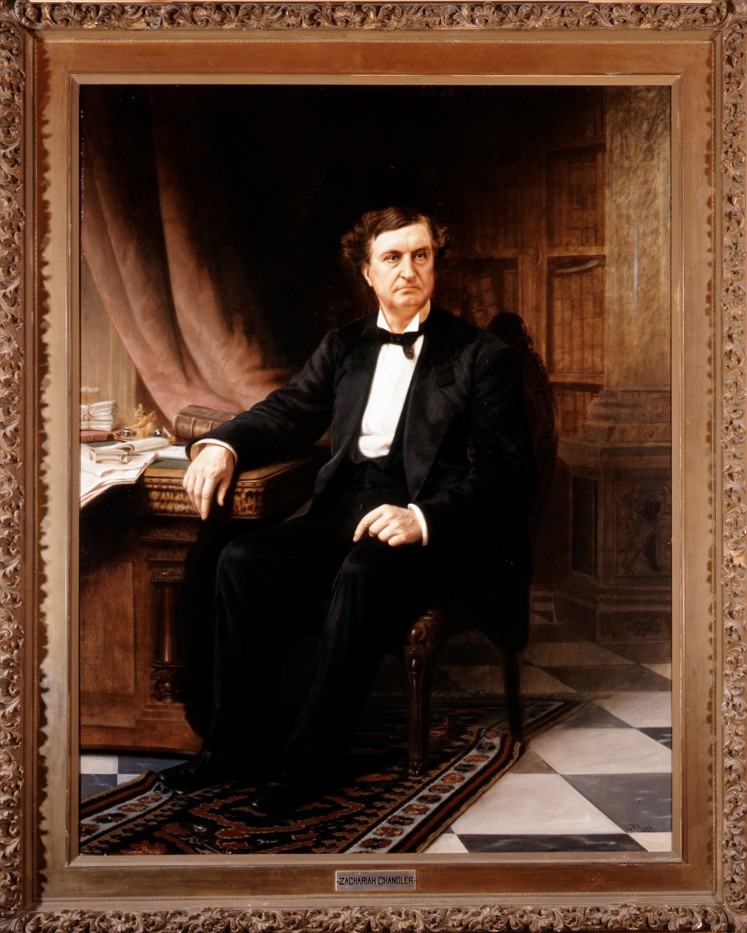
I vividly remember the first time I stood before Ives’s portrait of Zachariah Chandler. I was stunned by the lack of texture. Ives applied his paint with such precision that there is little to no evidence of an artist’s hand at work. Every transition is soft, every edge perfectly diffused. One form flows into the next without a single jarring line or visible correction.
The Secret Beneath the Surface
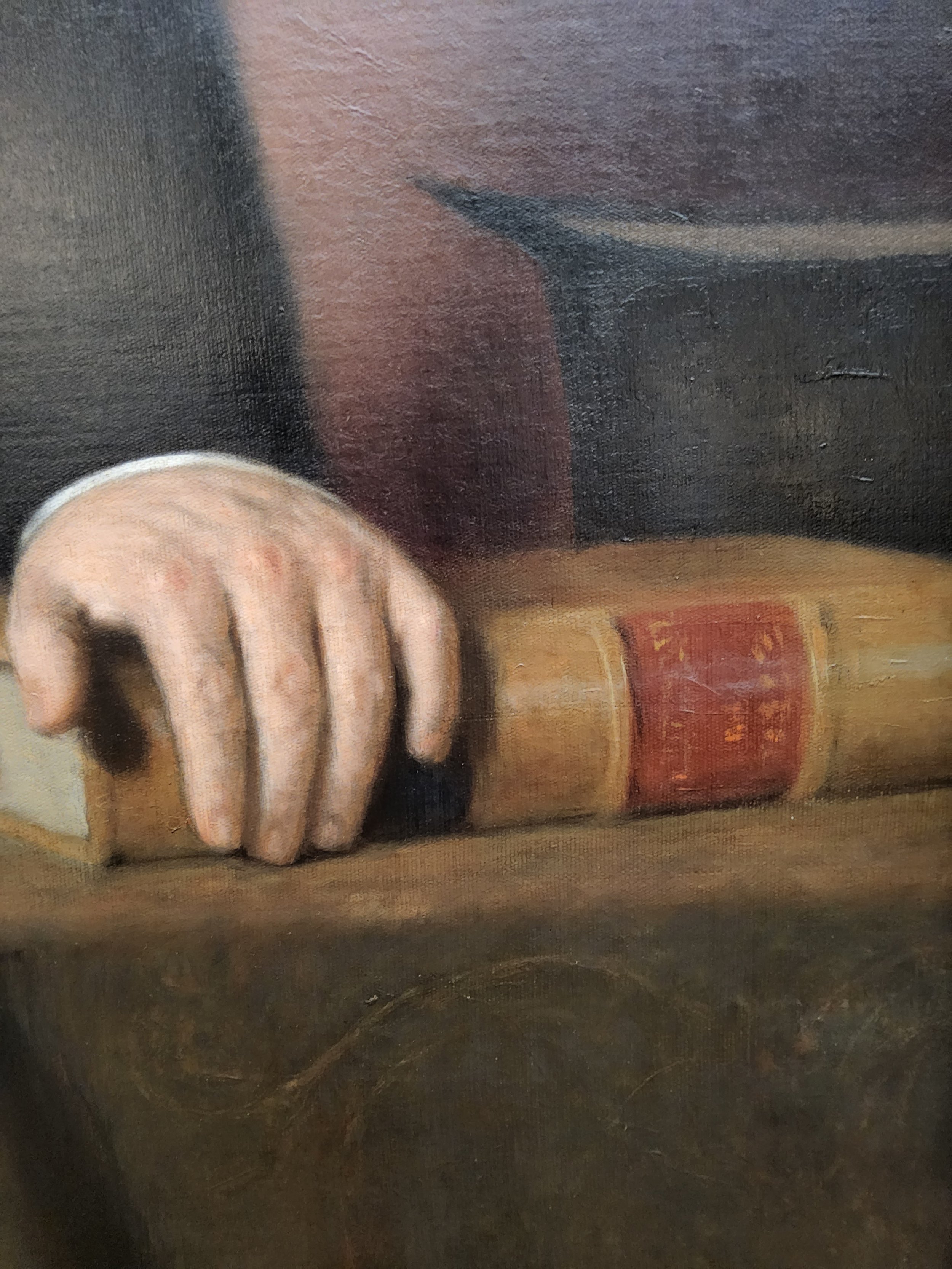
It wasn’t until a later, much closer inspection of the Chandler portrait that I noticed something revolutionary. This specific work—pictured below—is where I first detected the faint presence of pencil lines beneath the pigment.
Beneath the thin layers of oil, I could see that Ives had meticulously mapped out every shift in light and dark. In art, this is known as value mapping. Rather than relying on traditional outlines, Ives drew the specific shapes of shadows and highlights before ever touching a brush.
Because he used a lead-based medium for these underdrawings—which, unlike charcoal, is not absorbed into the paint—a century of drying has made the oil layers increasingly transparent. This process, known as pentimento, usually reveals an artist’s mistakes or changes of heart. But with Ives, there are no revisions. The paint was applied exactly where the drawing dictated. There was no evidence of error, no rethinking of the composition. His intention was perfectly matched by his execution.
A 19th-Century "Shortcut"
This level of precision is rare for an artist working purely from life. Most academic painters of that era used a "modeling" approach—a blend of tonal variations and structural outlines. Seeing these value maps across multiple Ives paintings led me to a provocative conclusion: Ives may have been working from photographic references.
I have used similar methods myself to speed up the creative process, though never with the obsessive detail found in Ives’s work. The sheer meticulousness of his value maps, combined with his lack of formal European training, suggests he may have used "tricks" of the trade—perhaps projecting a photograph or using a grid system to achieve such uncanny accuracy.
The Modern Dilemma
This discovery reframes Ives entirely. Today’s art world is often defined by an "anything goes" mentality regarding technology, but we usually think of this as a post-modern phenomenon. Yet, here was a mid-19th-century painter, working in the most traditional of genres—the institutional portrait—potentially using the cutting-edge tech of his day to bypass traditional limitations.
If Ives was indeed projecting or tracing photographic values, it forces us to reconsider the "academic" label. It raises a timeless question for every artist: Which tools are valid, and which are shortcuts? By looking closer at the aging lead lines on a canvas in Lansing, we find that the debate over technology in art isn't new—it was already happening in the 1800s, hidden in plain sight beneath the surface of a "perfect" painting.
