
John Coppin: A Study in Portraiture
1904 - 1986
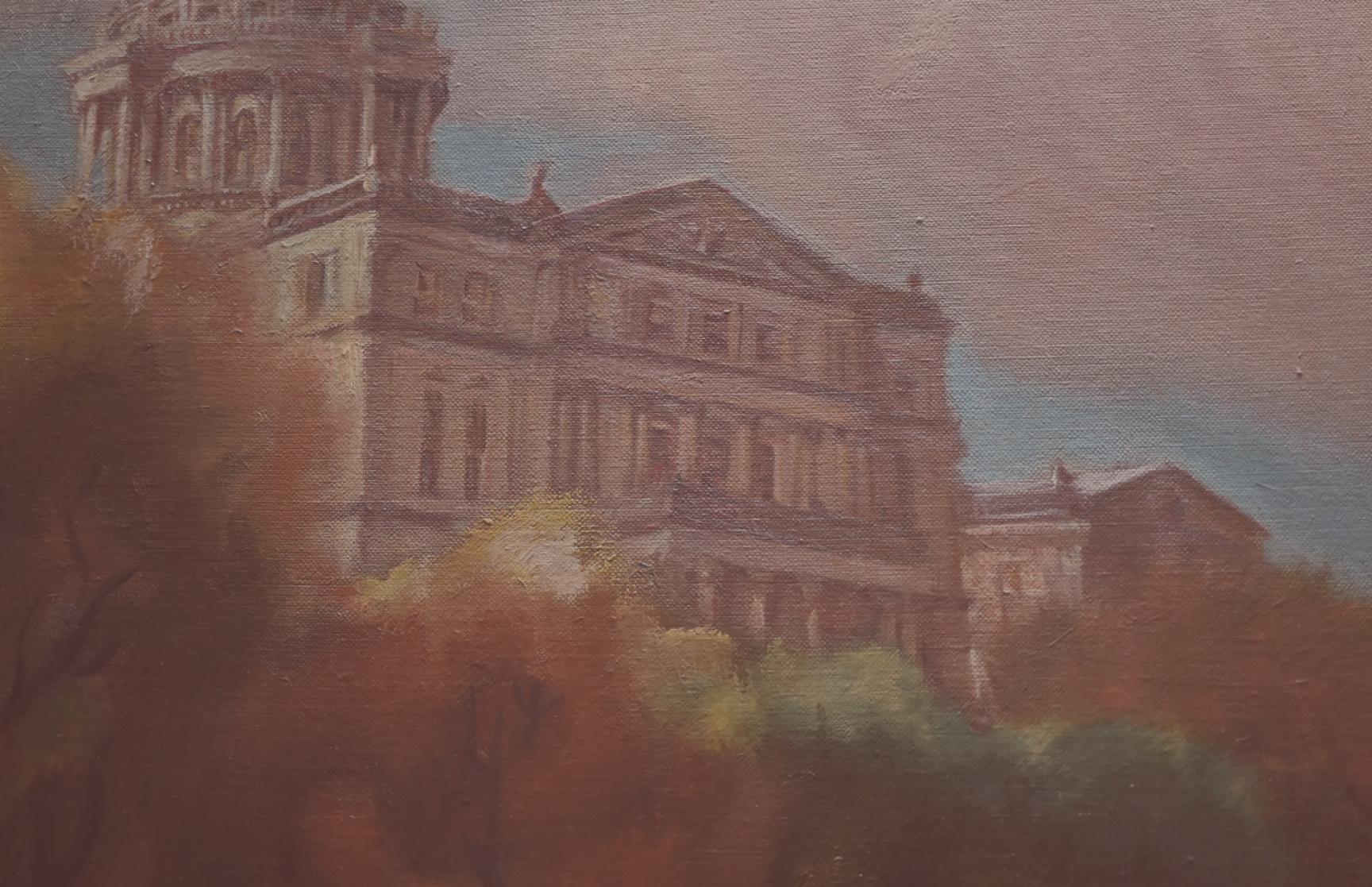
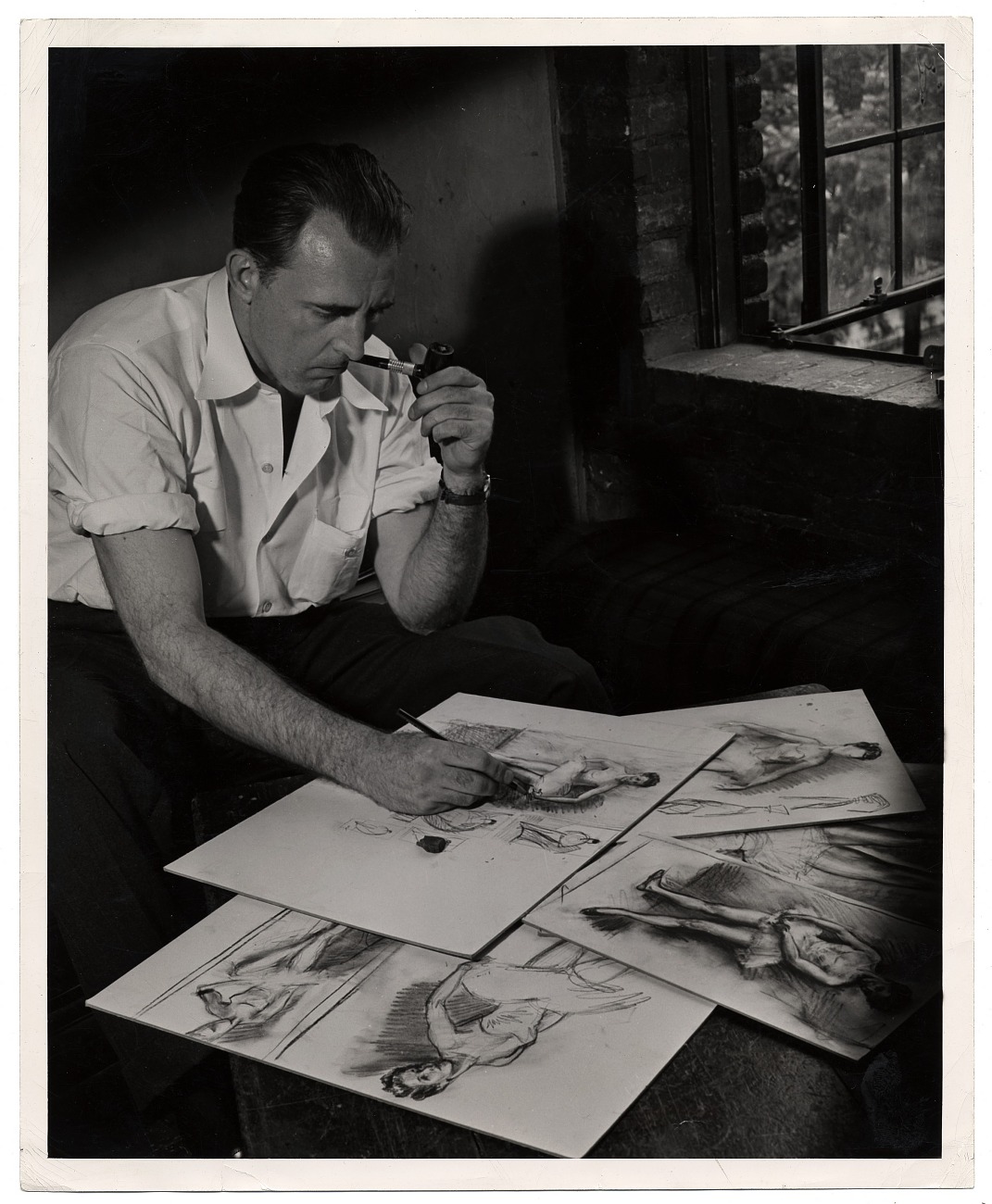
The Michigan State Capitol is home to a remarkable collection of gubernatorial portraits, including four painted by artist John Coppin (1904–1986). This virtual exhibition takes a closer look at Coppin’s work, highlighting how his relationships with his sitters shaped the outcome of each portrait.
As you explore, you will see how Coppin’s attention to lifelike detail, personality, and pose created portraits that go beyond likeness to capture the character of Michigan’s governors.
Coppin and His Sitters
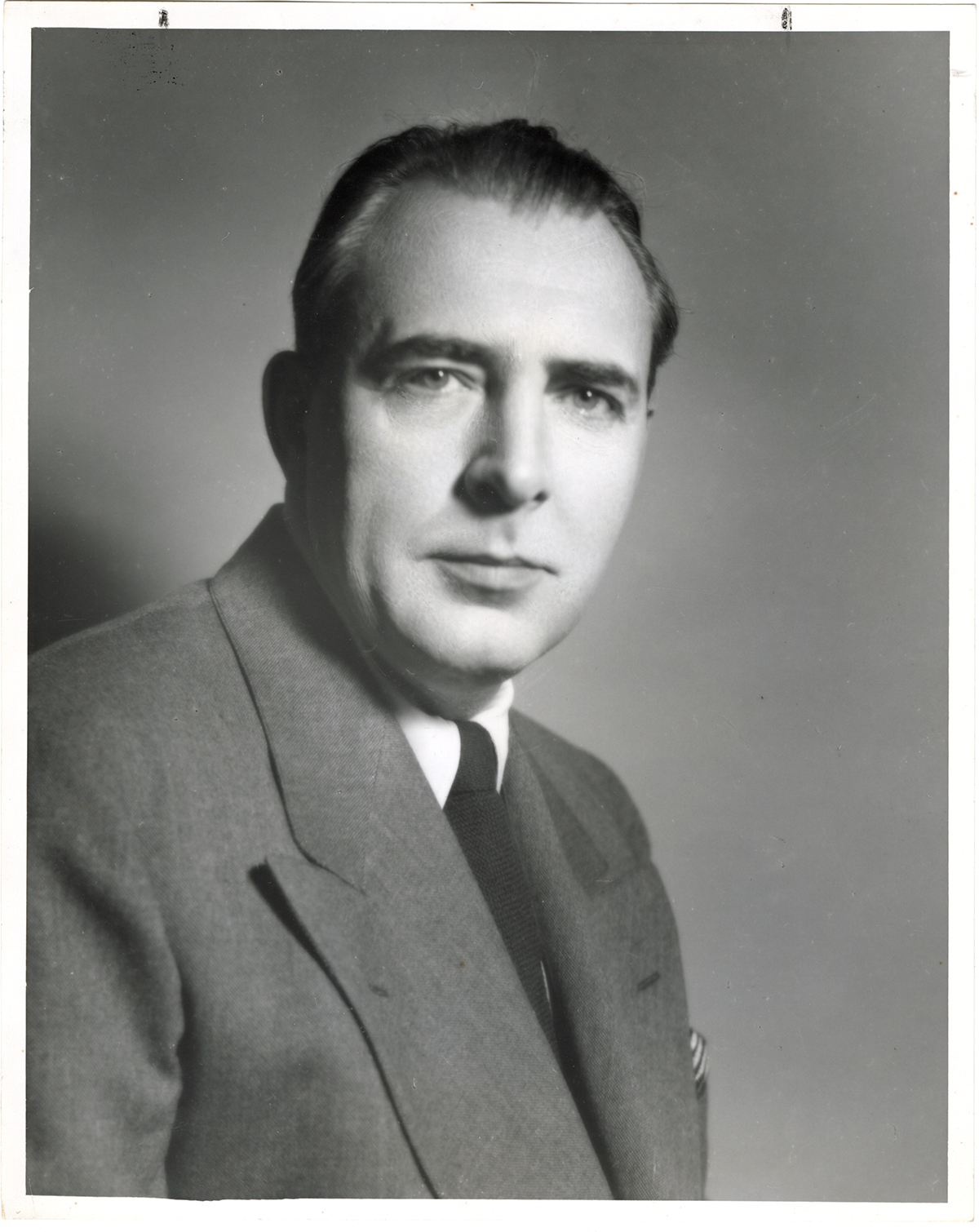
An artist’s relationship with their sitter can have a profound impact on the outcome of a portrait. While these dynamics are not always immediately visible in a piece, there are some instances in which it is quite apparent.
The four portraits by John Coppin (1904-1986) in the Capitol’s collection serve as an excellent example of this phenomenon. Coppin completed his first painting for the state in 1944, when he painted Governor Murray D. Van Wagoner. He went on to complete portraits of the subsequent three governors: Harry Kelly, Kim Sigler, and G. Mennen Williams.
Paramount
Precision
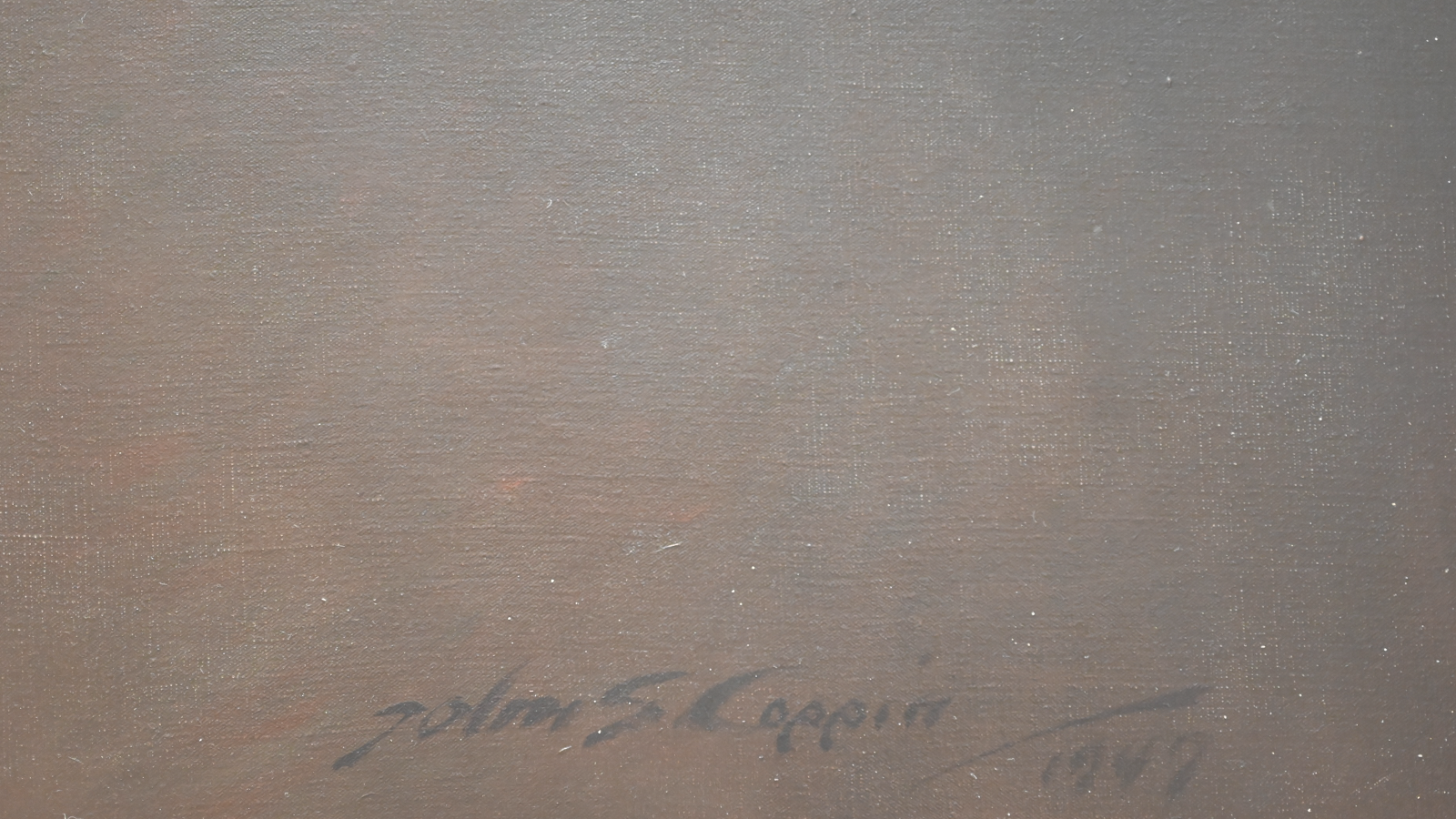
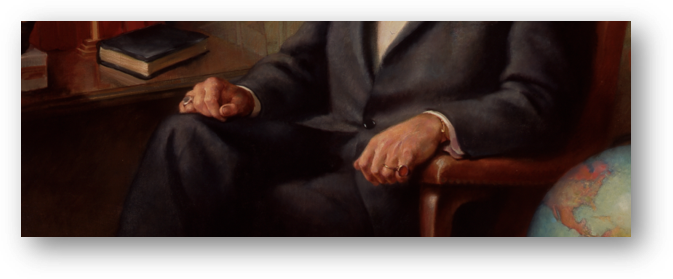
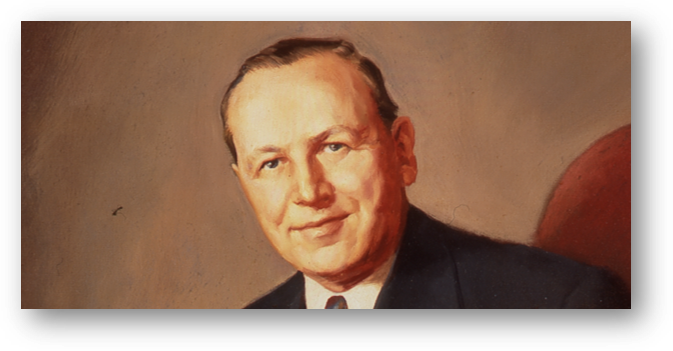
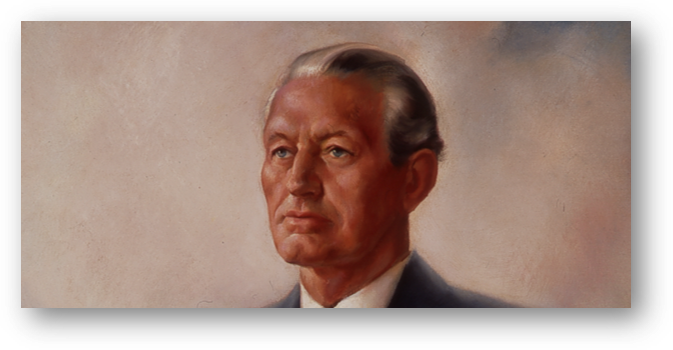
Coppin’s portrait style is consistently naturalistic, meaning that he paints his subjects in a lifelike manner. In 1983, a reporter from the Sarasota Herald Tribune wrote, “Coppin’s paintings are so true to flesh tones that a critic noted that if you cut them they’d bleed.” The artist considered achieving a believable and accurate flesh tone “of paramount importance” in a painting.

Expression at the Heart of Portraiture
Coppin was not satisfied with solely capturing an accurate physical likeness, however. Instead, he sought to holistically portray his subjects, stating, “A portrait is a work of art representing an individual. The pleasure derived from looking at it is due to its value as a likeness, as well as its aesthetic qualities. It should awaken in the beholder the feeling that he is looking at the personal, physical, mental, and characteristic qualities of the portrayed subject.”
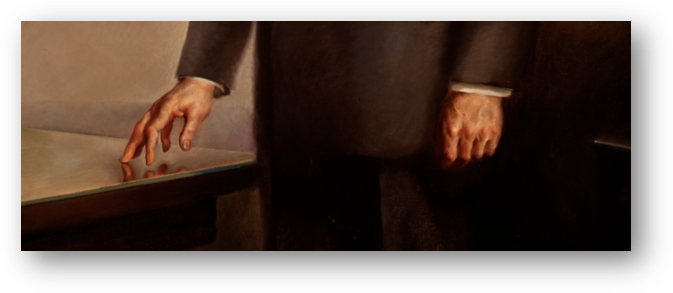
Along with the coloring of the skin, therefore, Coppin also placed emphasis on properly capturing a person’s expressions. This can be seen, in particular, in the way he paints the faces and hands of his sitters. In interviews, he often discussed his search to uncover the true personality of each of his subjects through close observation. He once stated, “As the person is, it begins to show on the outside. The eyes, of course, are the real key. They reveal the mind. The eyes and hands give a person away. What a person does with his hands gives an indication of what he thinks, more than does a face that can be controlled.”
“A portrait is a work of art representing an individual. The pleasure derived from looking at it is due to its value as a likeness, as well as its aesthetic qualities. It should awaken in the beholder the feeling that he is looking at the personal, physical, mental, and characteristic qualities of the portrayed subject.”

Personalized through Collaboration
Outside of these key areas on his figures, Coppin became a bit more creative. Clothing and background elements, for example, might be more colorful, detailed, or unique. He relied on the preferences and expectations of his sitters to determine how traditional or imaginative he could make each portrait. This resulted in outcomes that, at first glance, might not look as if they were all made by the same hand. Coppin’s willingness to collaborate with his sitters in order to best capture their personalities – even when this meant straying from the “norm” – makes his body of work in the Capitol’s collection an intriguing and worthwhile case study.
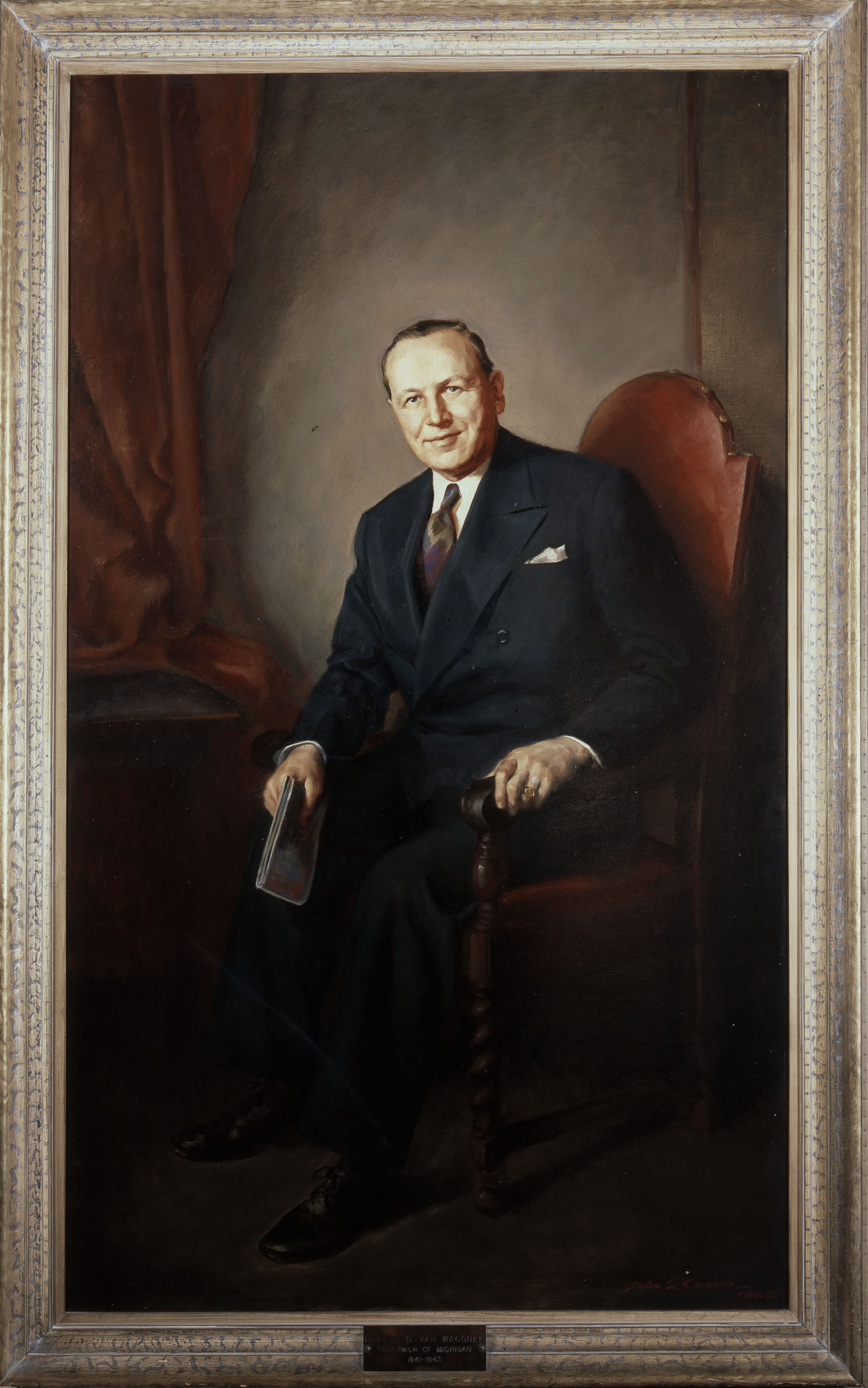
Governor Van Wagoner
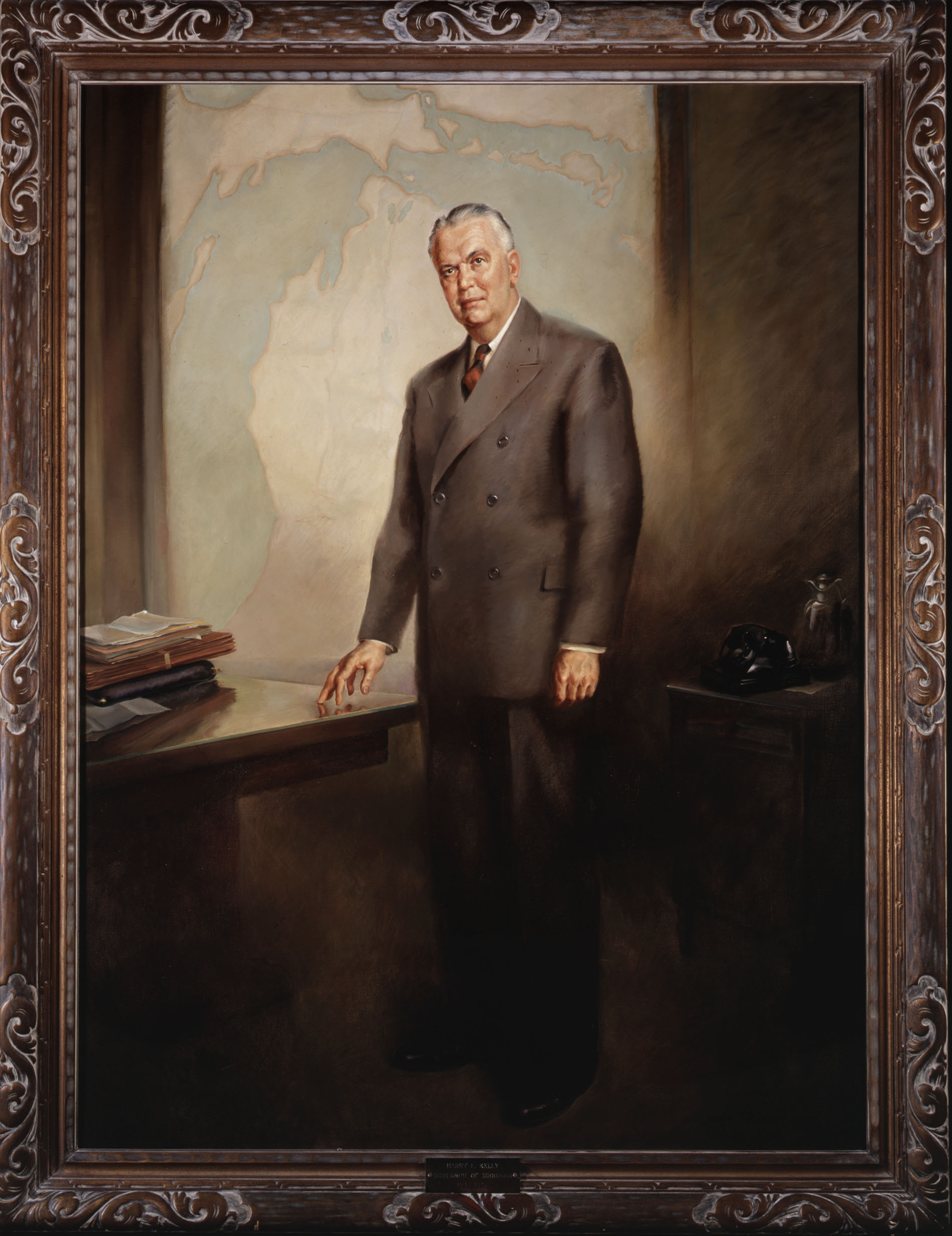
Governor Kelly
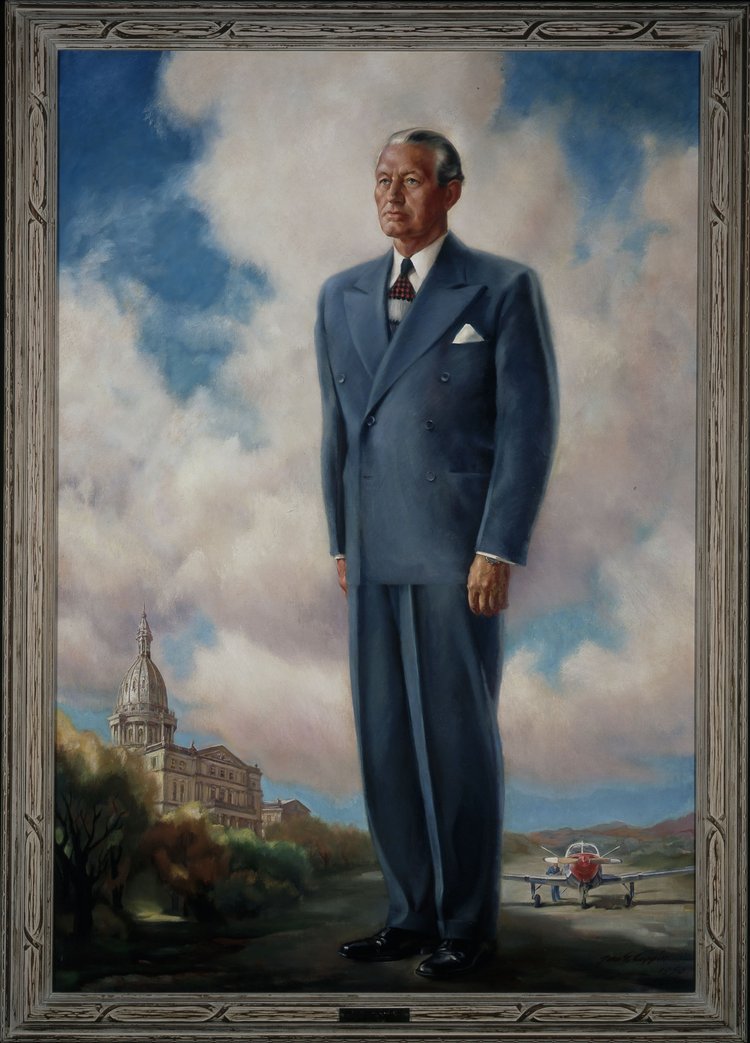
Governor Sigler
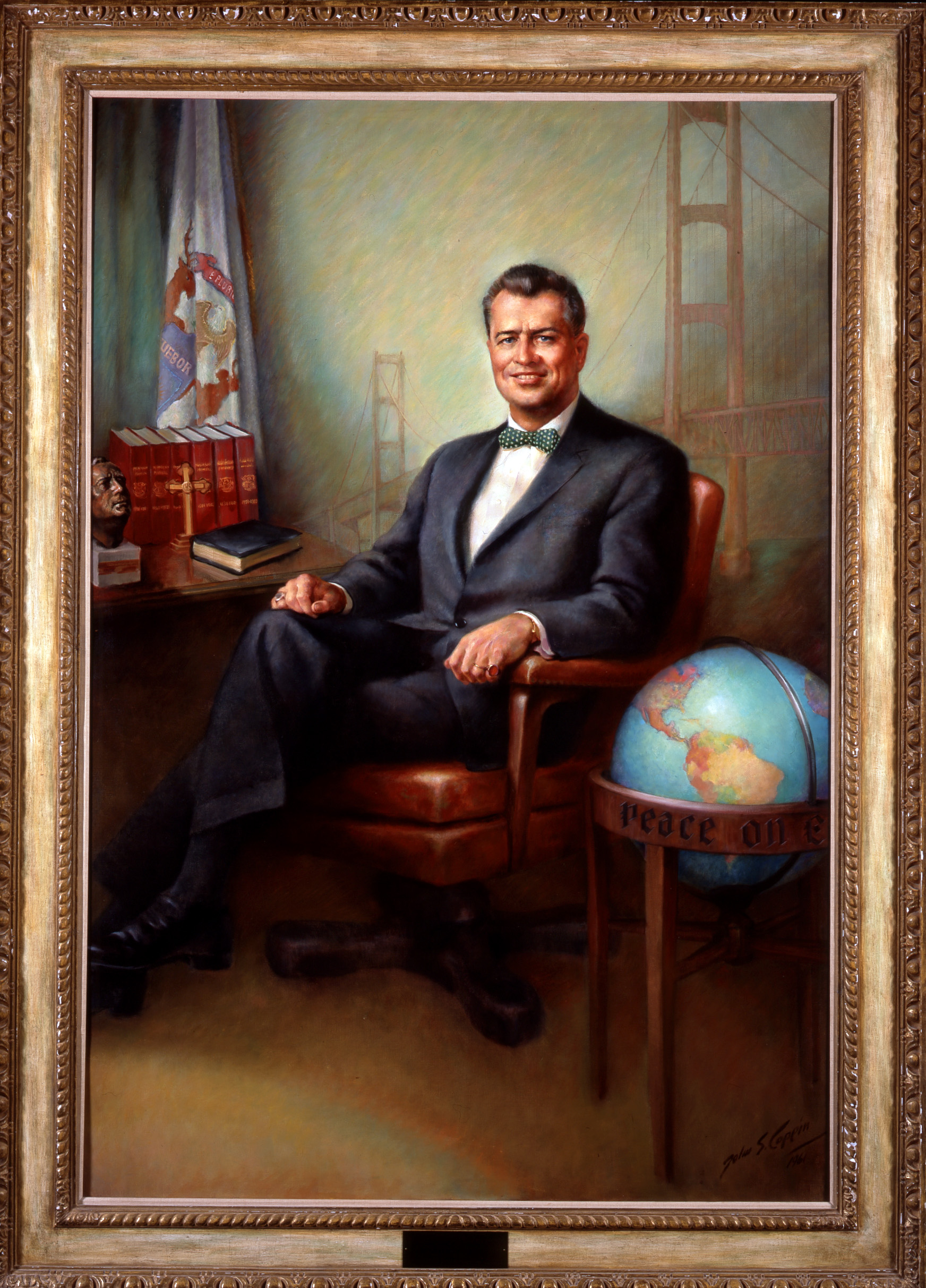
Governor Williams
Governor Van Wagoner, 1944
Governor Van Wagoner’s portrait is the most traditional of the four Coppin paintings in the Capitol. The governor sits in a high-backed armchair and looks at the viewer with a calm, pleasant expression. He wears a standard suit, and his slightly askew, subtly colorful tie adds a bit of fun to his clothing. Behind him is a simple background with a classical red curtain cascading down the left side of the portrait. One symbolic detail stands out: the folded map he holds, referencing his work improving Michigan’s highway system during his service as State Highway Commissioner.
Although Van Wagoner’s portrait might appear simple to the viewer, Coppin later shared that it was more challenging than the other three Capitol portraits. Coppin said, “Pat Van Wagoner was the first, and he was very difficult. This was because of his big smile, his constant smile.” He also explained that less flexible expressions are easier to paint, as smiling changes the eyes and creates distortion from a neutral resting expression. While the final portrait shows Van Wagoner calm and composed, the hint of a smile captures his cheerful nature while maintaining the formal tone expected in a classical portrait.
The governor’s pose enhances this effect. Van Wagoner sits leaning slightly forward, one hand resting on the arm of the chair, suggesting that he is ready to stand and engage the viewer. This subtle body language strengthens the sense of approachability and warmth Coppin sought to convey.
Governor Kelly, 1947
Coppin considered Governor Harry Kelly easier to paint due to his more subdued facial expressions. At first glance, Kelly’s portrait appears similar to Van Wagoner’s, but Coppin introduces playful touches that give it a more modern tone.
The background features a large map of Michigan, and Coppin leaves his brushstrokes visible on the wall, floor, furniture, and even in Kelly’s suit. Variations in color across these areas add visual interest and energy. Compared to Van Wagoner’s portrait, with fewer visible brushstrokes and a more classical tone, Kelly’s portrait feels more modern.
Coppin includes everyday objects to ground the portrait in Kelly’s working environment: a stack of paperwork on the desk, and a telephone and coffee pot behind him. One notable detail demonstrates Coppin’s skill painting from life — Kelly’s right hand rests lightly on the reflective desk surface, and the tips of his fingers mirror back in the glass. This subtle detail draws the viewer’s attention and highlights Coppin’s eye for naturalism.
Governor Sigler, 1950
The portrait of Governor Kim Sigler stands out as one of the most unusual works in the Capitol’s collection due to its exaggerated proportions and dramatic composition. Sigler is painted at heroic scale, appearing to tower over the Capitol building beside him. A large, cloudy sky fills the background, and a small plane near Sigler’s feet references his experience as a pilot.
Although the style differs significantly from Coppin’s previous gubernatorial portraits, this change was intentional. News articles from 1950 show that Sigler and Coppin collaborated closely, aiming to break from tradition and create a unique, memorable portrait. This aligned with Sigler’s reputation for bold fashion choices and a big personality.
A Lansing State Journal article recounts Sigler telling Coppin that he was tired of “austere, former portraits” showing governors in a “drab suit” looking “as if the weight of the world were on his shoulders.” Sigler asked if Coppin “dared to be different,” and Coppin agreed, stating, “I’ve always wanted to do something on the bold order, and I think this will be it.” The resulting portrait remains one of the most discussed works in the Capitol rotunda.
Governor Williams, 1961
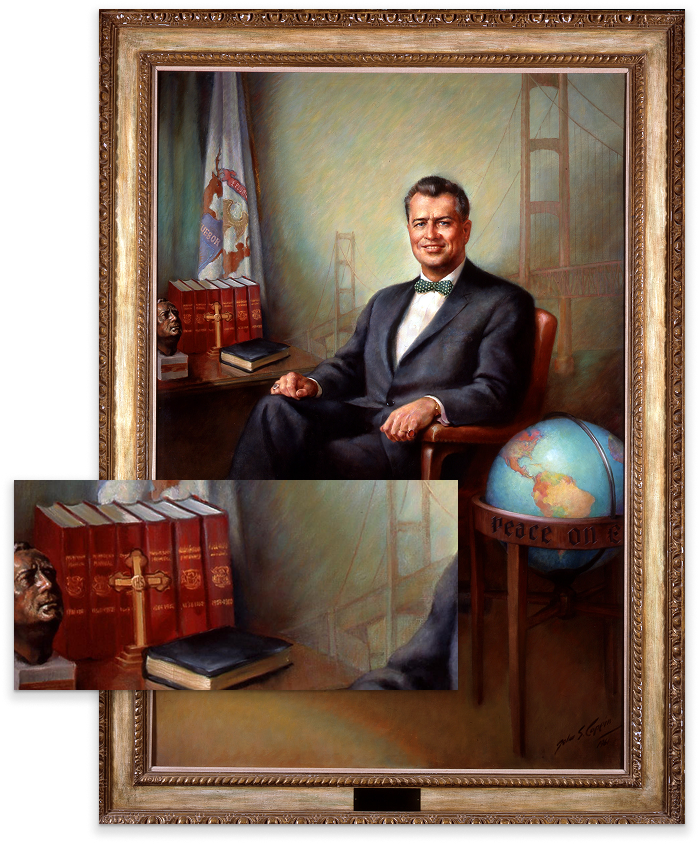
The final Coppin portrait in the collection, depicting Governor G. Mennen “Soapy” Williams, blends the traditional and eccentric styles of his earlier portraits. Williams sits at his desk, a standard formal pose, but the setting is more colorful and detailed.
Behind Williams is a view of the Mackinac Bridge, referencing his administration’s celebrated achievement of its construction. Additional symbolic objects surround him. Six red Michigan Manuals represent his six terms in office. A cross and Episcopalian prayer book reflect his religious background. A globe acknowledges his diplomatic work, which included serving as Assistant Secretary of State for African Affairs under President Kennedy and later as Ambassador to the Philippines under President Johnson.
Williams leans forward slightly and smiles broadly, capturing his approachable and upbeat personality, widely credited as a factor in his electoral success. He sports his signature green polka dot bow tie. Together, the expressive elements and symbolic objects reflect Coppin’s intention to create portraits that communicate not just physical likeness, but the sitter’s values and character.

“The less flexible, the less exaggerated a person’s expression, the easier he or she is to paint [… ] when the mouth is open, as in talking, the eyes are less open. The minute one smiles, the eyes close a little. There is a degree of distortion from the norm.”
Conversations Between Coppin and Sitter
Coppin’s approach to portrait sittings centered around making his sitter feel comfortable. He would start conversations about topics that interested them, from clothes and books to philosophy. In a conversation about his sittings, he once noted, “It is an emotional experience on the part of both. It takes two to make a portrait. I must have the sitter with face relaxed, and mentally interested; mentally alive, relaxed and happy. I want the sitter first of all to get comfortable in the chair. Then the conversation and music to help put the sitter at ease.” By taking his subjects’ mental state and comfort into consideration, Coppin created a space for them to speak, move, and sit naturally. This helped reveal the “neutral” expressions he sought to depict, ultimately making his portraits appear as more accurate likenesses of the individuals he painted. The four Coppin portraits that hang in the Capitol today serve as a testament to the success of Coppin’s approach and the importance of healthy rapport between artist and sitter.

Explore the Collection For Yourself
Explore the Capitol’s ornate interior and observe our portraits in person.
